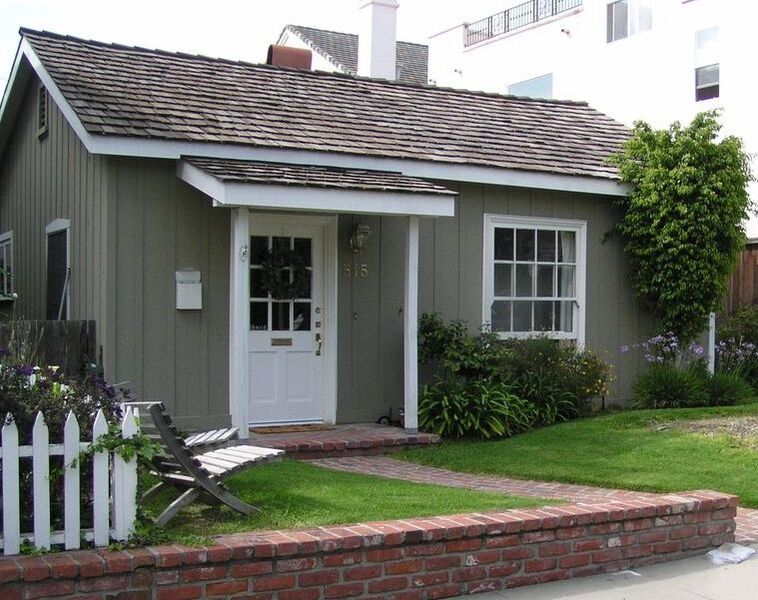
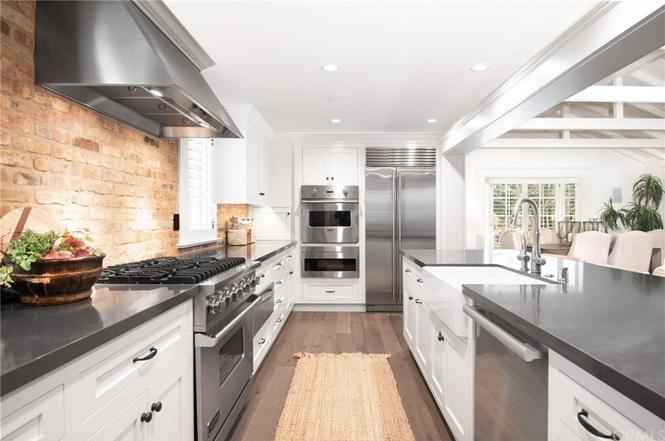
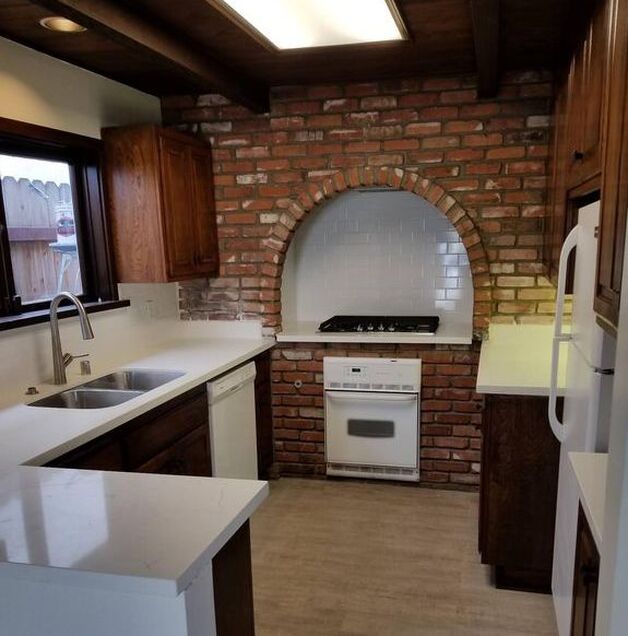
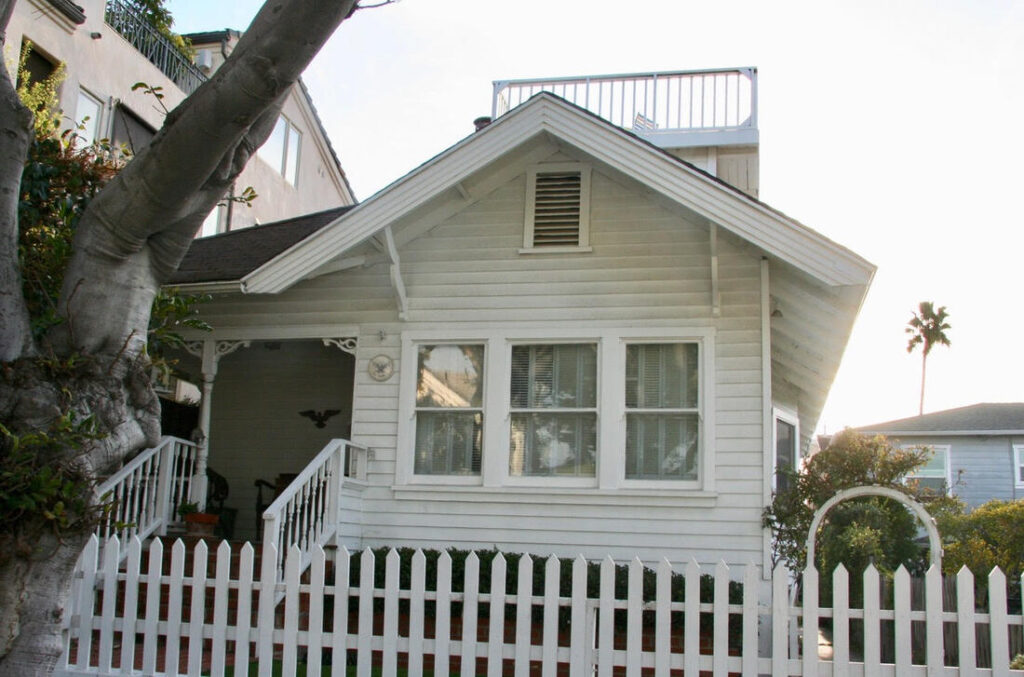
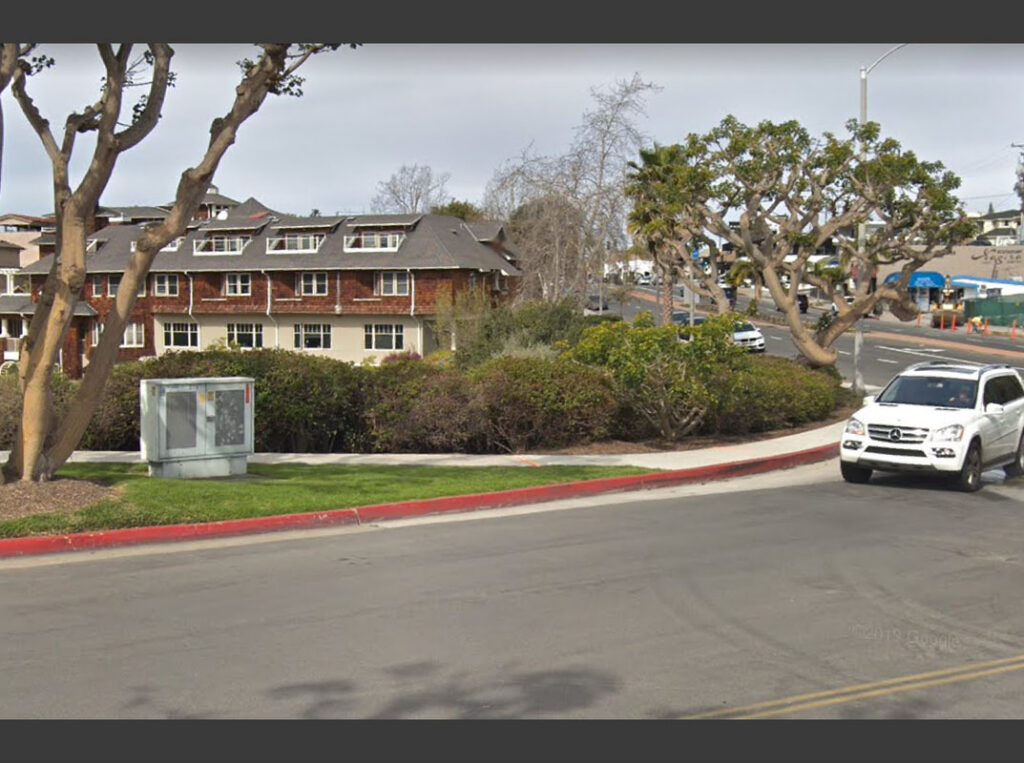
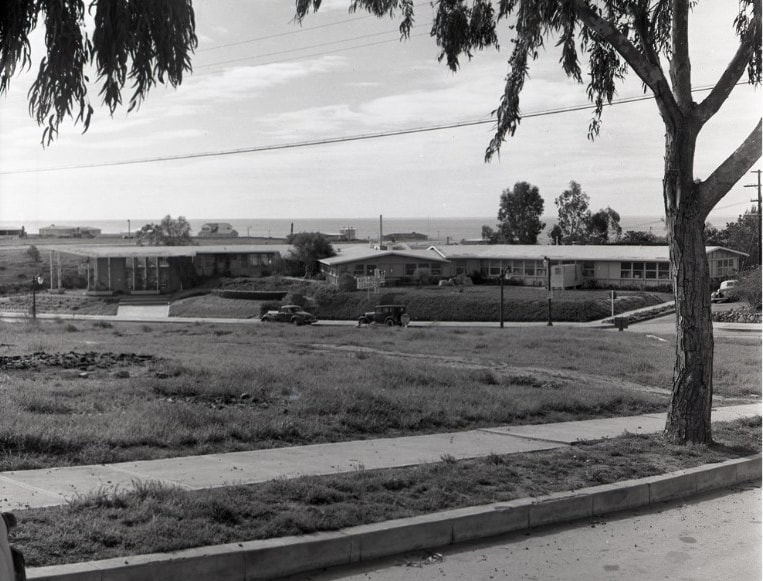
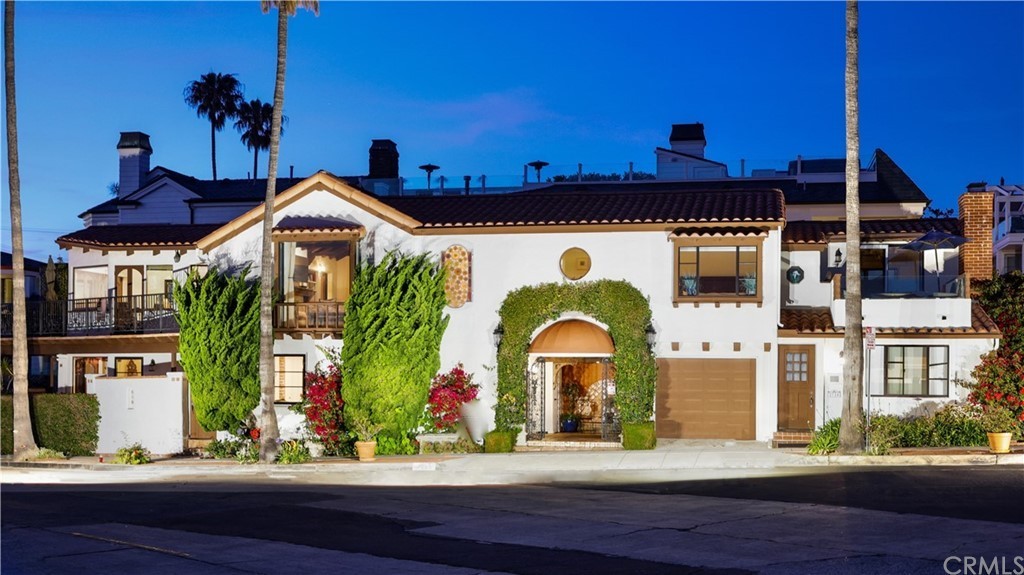
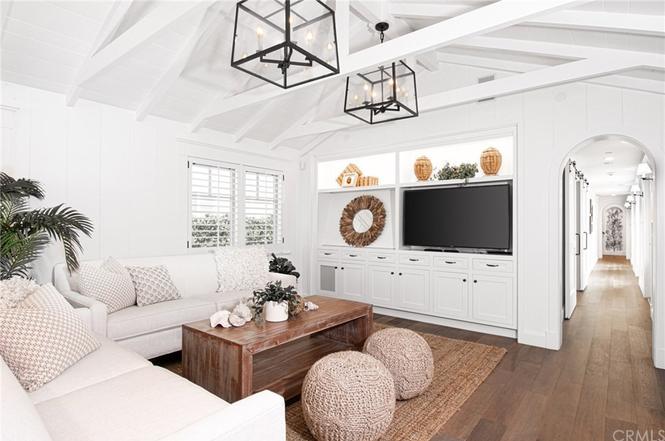
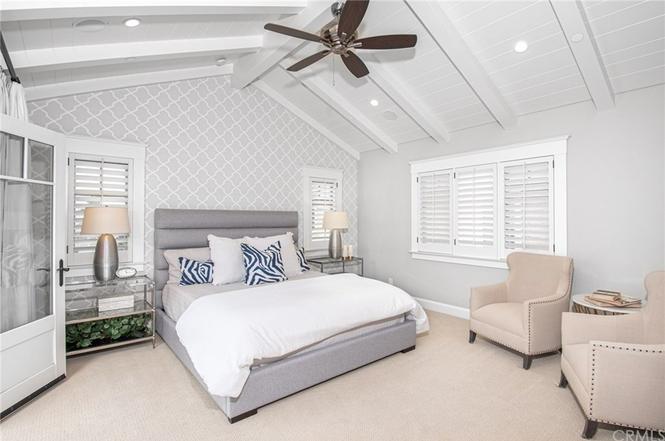
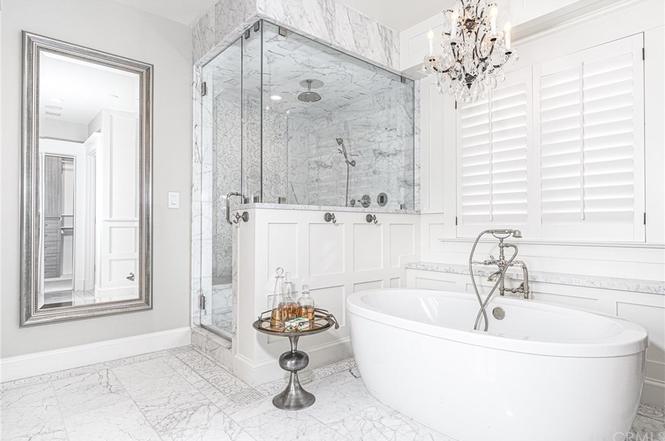
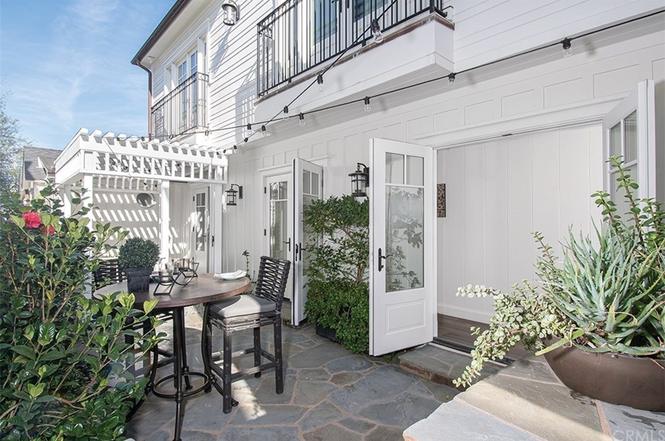
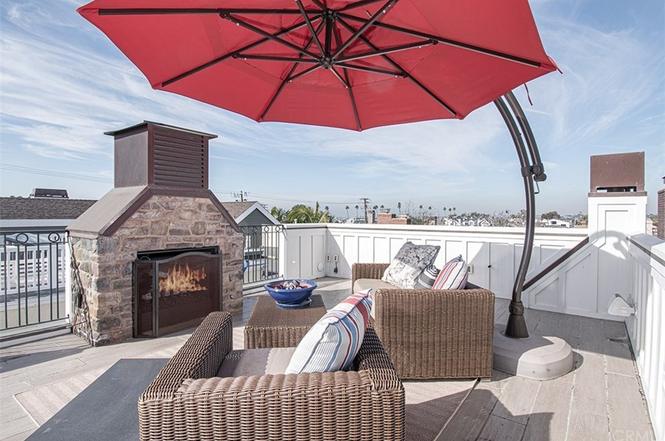
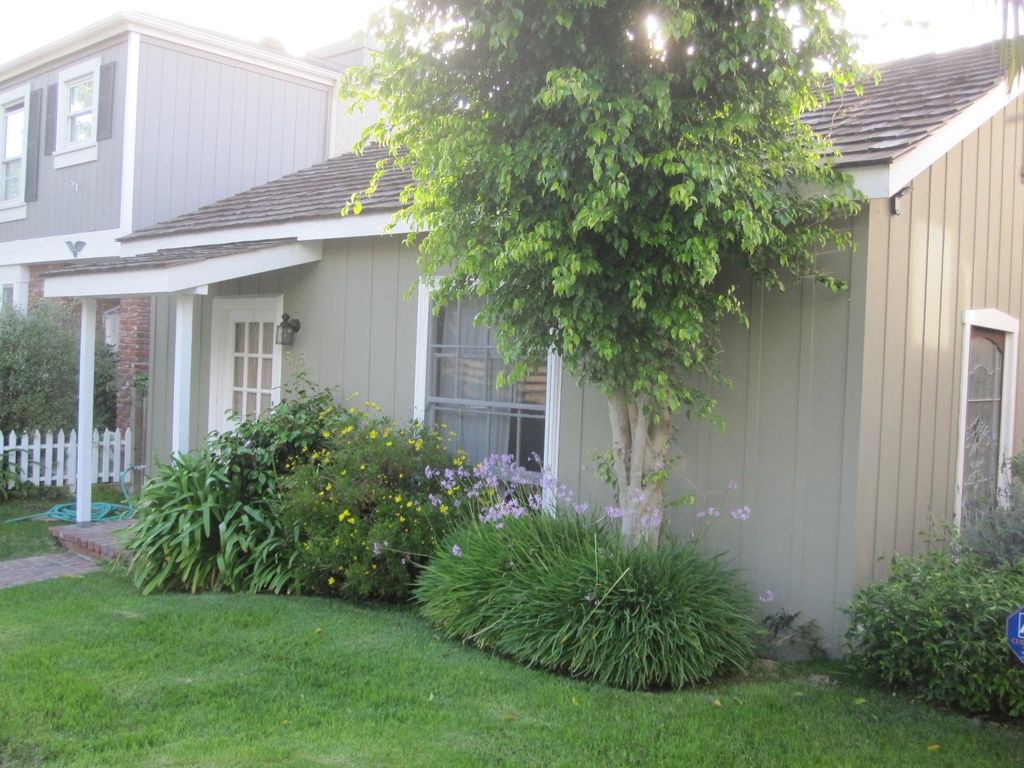
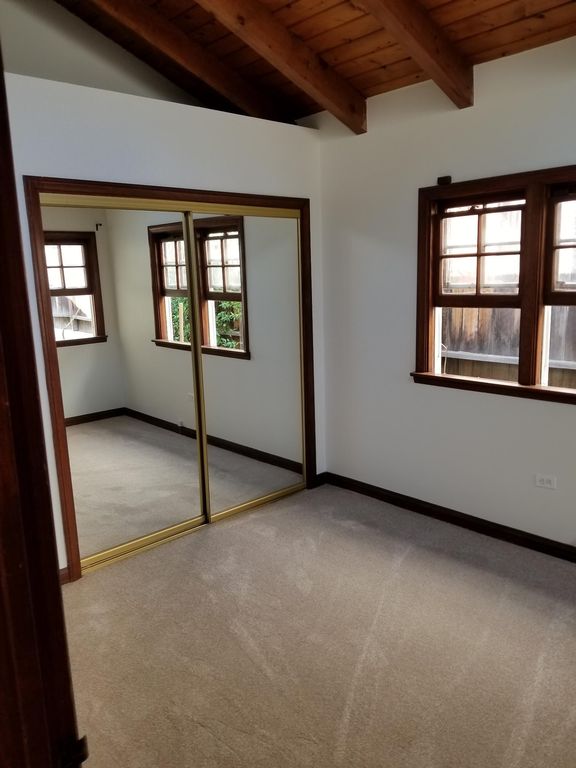
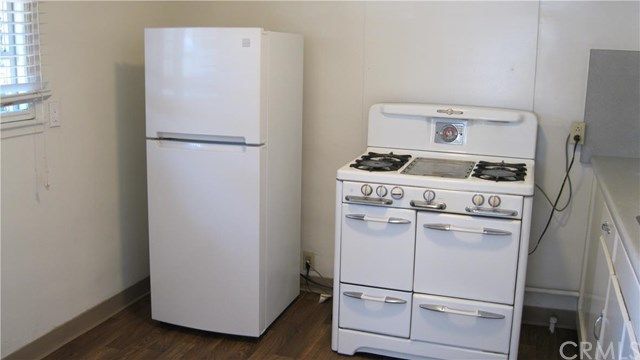
515 Fernleaf Ave., Corona Del Mar, CA (2018); Photo Credit: MLS/Zillow
Larger than it appears from the street, this 1932 cottage is reported to have 3 bedrooms, 2 bathrooms, and 1,400 sq ft.
515 Fernleaf Ave., Corona Del Mar, CA (2018); Photo Credit: MLS/Zillow
It offers an abundance of charm inside (red brick in the kitchen, dark wood moldings and built-ins throughout) and outside (cedar shake roof, board and batten siding).
515 Fernleaf Ave., Corona Del Mar, CA (2018); Photo Credit: MLS/Zillow
t was last sold in 2002 for $980K and seems to be rented out in the past few years.
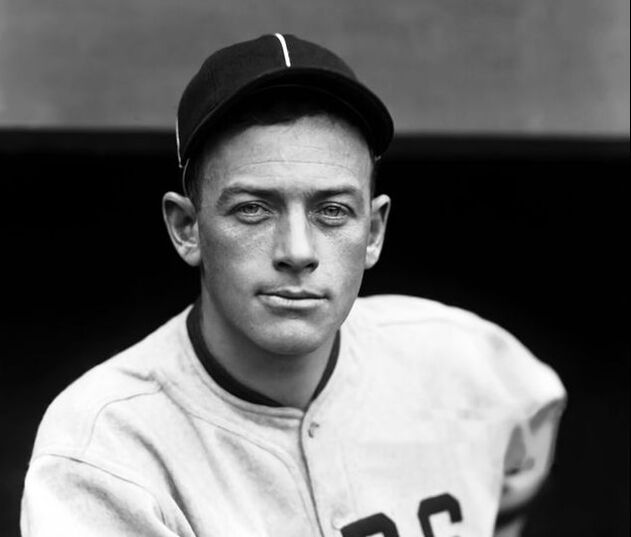
Arnold "Jigger" Statz of the Chicago Cubs in 1924. (Photo by Sporting News via Getty Images)
In the headline of his obituary, the Los Angeles Times called him the “Grandest Angel of Them All.” After a 35-year career in baseball that included 18 seasons in a Los Angeles Angels uniform, Arnold ‘Jigger’ Statz died at home in Corona Del Mar on March 16, 1988 at age 90. With Mike Trout not born for another three years, the headline was not hyperbole. To this day, Statz has the 4th most hits as a professional baseball player behind only Pete Rose, Ty Cobb, and Hank Aaron. Wondering why he isn’t as well known as these three Hall of Famers? 3,356 of his hits came as a member of the Angels back when they played in the Pacific Coast League.
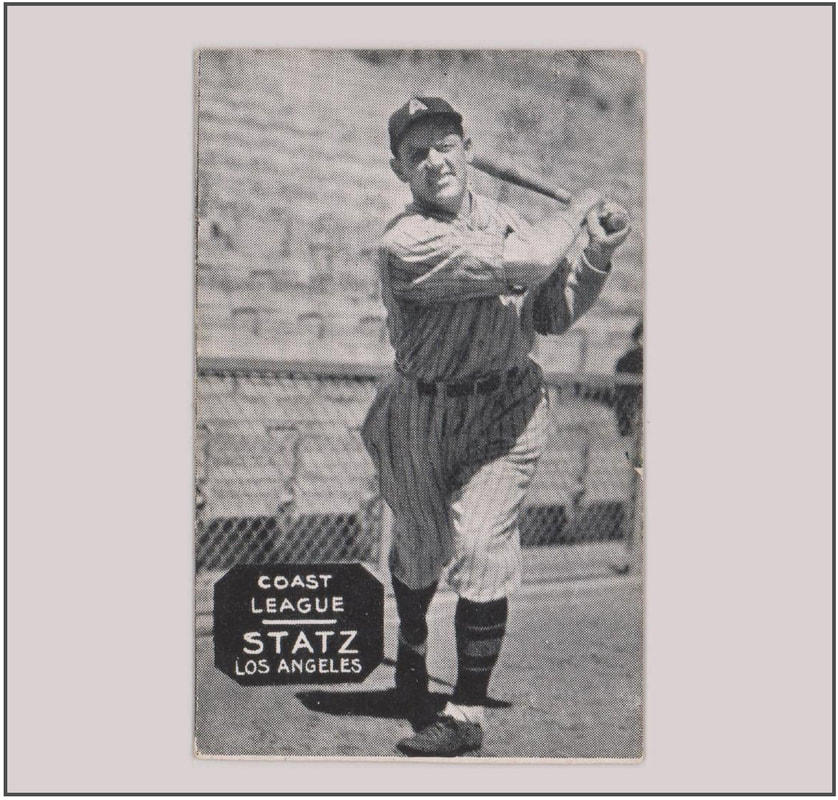
1930 Zee Nut baseball card of Jigger Statz
Statz was born in Waukegan, Illinois and his family briefly lived in Alabama before moving to Massachusetts. Along the way he earned his nickname from his diminutive size and a mispronunciation of ‘chigger,’ the mite pest. The 5’7, 150 pound speedster achieved success on the diamond at Holy Cross and signed with the New York Giants after his sophomore year in 1919 and spent 8 seasons in the majors with the Giants (1919-20), Boston Red Sox (1920), Chicago Cubs (1922-25), and Brooklyn Robins (1927-28).
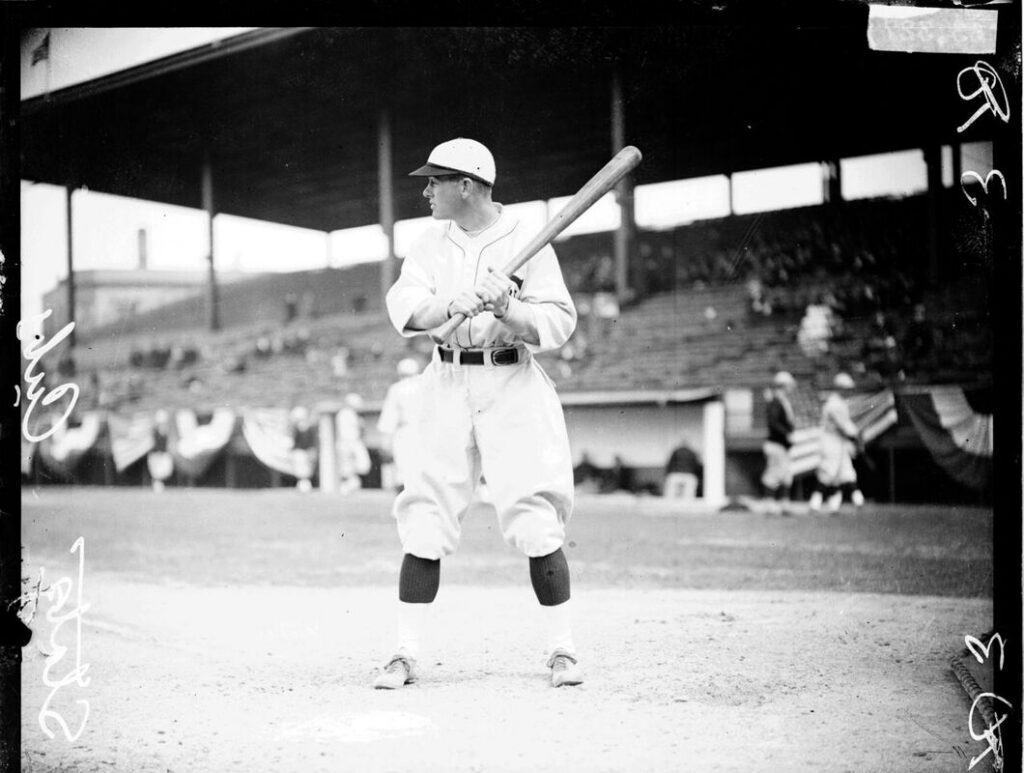
Statz at bat with the Cubs in 1922 at Wrigley Field
His best MLB season was with the Cubs in 1923 when he hit .319 with 209 hits, 10 home runs, and stole 29 bases, while playing a brilliant center field. In 1926, the Cubs sent him to the PCL and he hit .354 with 291 hits, 68 doubles, 18 triples, and scored 150 runs with an almost perfect fielding percentage of .997.
After playing for Brooklyn, he returned to LA for good in 1929. He starred as himself in the Paramount film ‘Fast Company’ and played for the Angels until 1942, turning down many opportunities to return to the major leagues to play for the Cubs. At the time, the Pacific Coast League was the only professional baseball on the West Coast so the quality of play and the salaries were similar to the major leagues.
“It was a warm climate, the intimate ballparks and the competitive salary that I liked about the Pacific Coast League,” he once explained during a magazine interview.
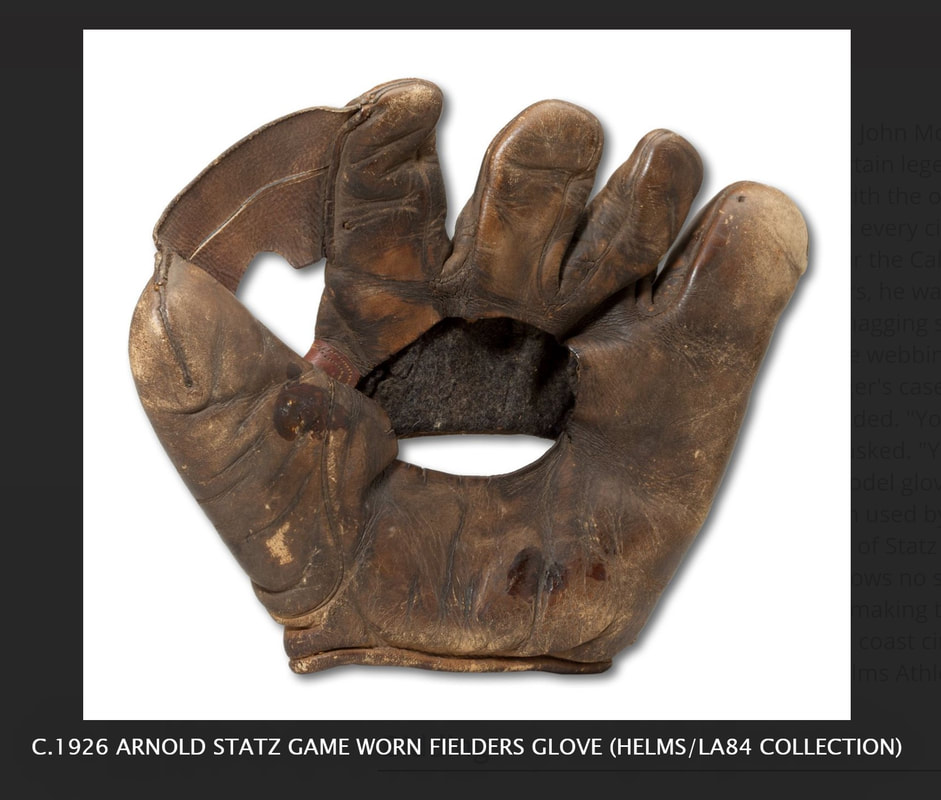
He would become a PCL legend, being voted to the All-Century team with Joe DiMaggio, and holding the league records for most games, singles, doubles, triples, runs, putouts, and assists. While his 4,000+ hits left his mark on baseball history, he may have been an even better fielder. Hall of Famer Duke Snider whose career in New York overlapped with Willie Mays and Mickey Mantle called him “the greatest center fielder I ever saw.” Statz was known for his tremendous speed, positioning and that he cut out the palm of his glove to get a better feel for the ball.
Statz’ game worn glove from 1926 was recently sold at auction.
He finished his career as a player-manager for the last three seasons before retiring in 1942. He would scout for the Cubs on the west coast for many years and also managed their farm team in Visalia for a couple seasons. A tremendous golfer who had won many amateur championships before, during and after his baseball career, he was known to golf with billionaire Howard Hughes, a 2 handicap golfer. Statz would eventually retire to Leisure World in Laguna Hills in the 1970s and after his wife’s passing, he moved to Wavecrest in Corona Del Mar with family for his final years.
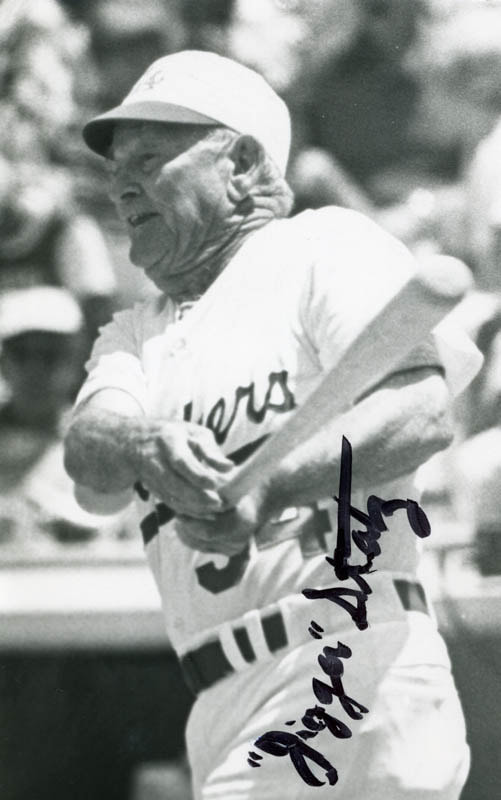
Statz at bat during Dodgers Old Timer’s Day in 1976 at age 79
Two of our cottages in the Village date back to 1914 – the same year that WWI started and Babe Ruth made his first appearance in the majors.
348 Dahlia Place (1914)
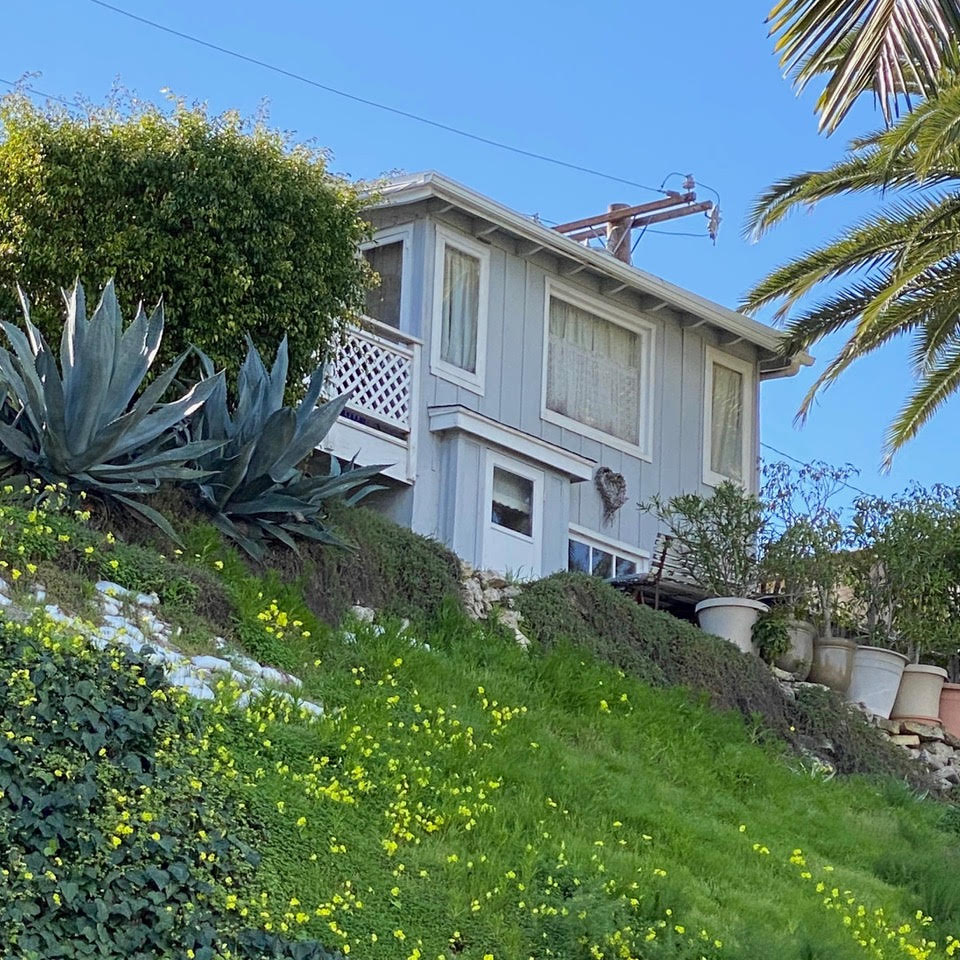
348 Dahlia Place is now tucked away behind some apartments and is perched over Bayside Dr. It was located near the first building in Corona del Mar, the Hotel Del Mar and may have been one of two cottages built for the staff.
A block away is 214 Dahlia Ave. which is listed as a 1914 house but according to an interview a few years ago with the owner, it was actually built much earlier and moved from an Irvine bean farm to its current location. He said that he has a photo of it from 1910 when it was a barn in Irvine (we desperately need a copy of this photo!) but that it may be much older.
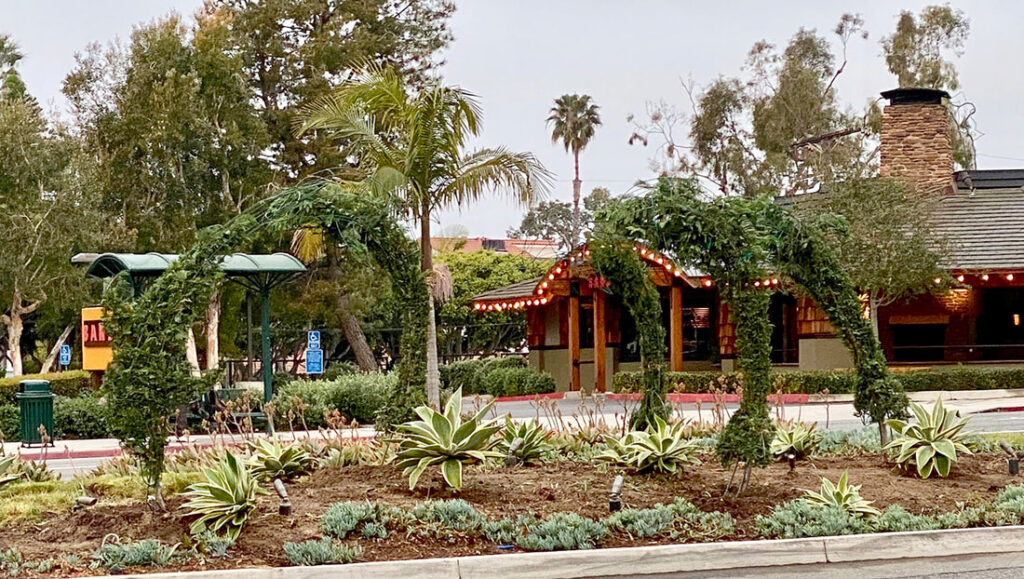
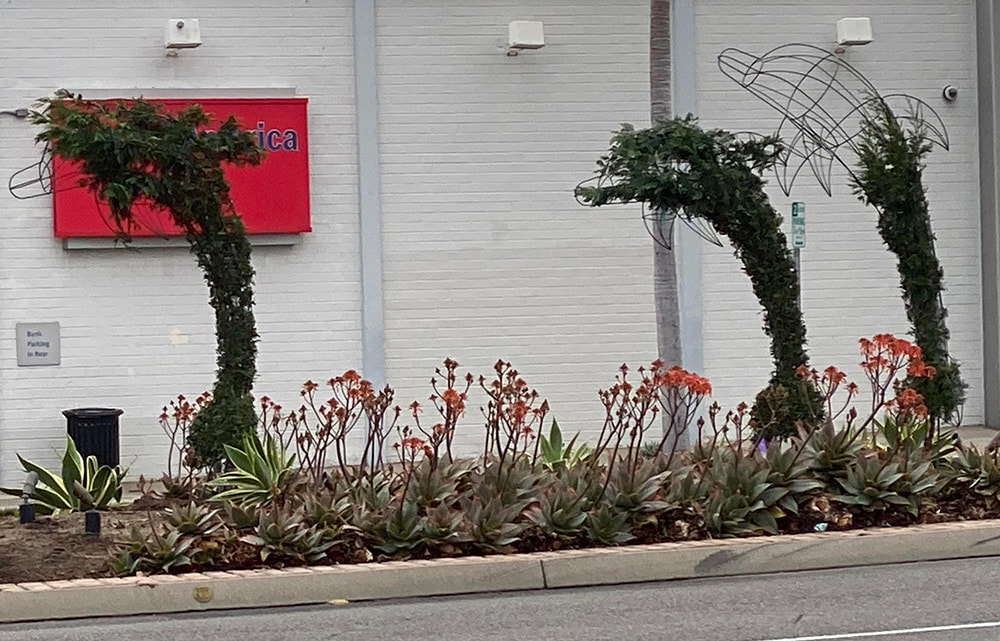
The new dolphins which replaced the previous ones that had outgrown their shape and begun to resemble manatees, were planted last week. (Photo credit: Ron Yeo)
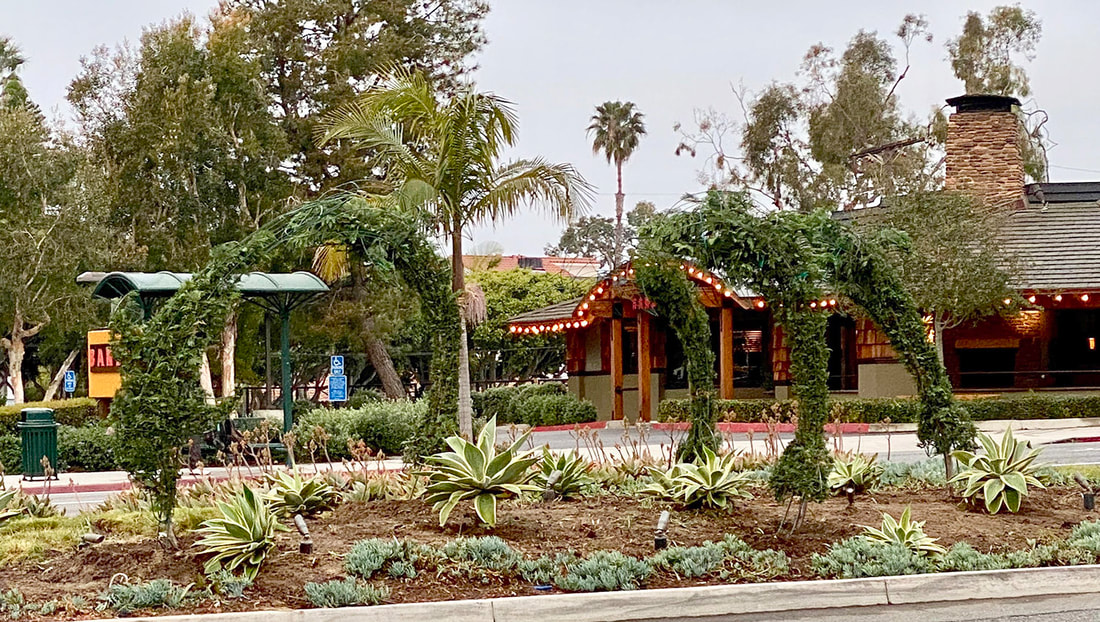
You may have driven by and noticed that we have new ‘skinny’ dolphins in the medians along East Coast Highway at Marguerite. Local artist/architect/historian Ron Yeo was able to fill us in on the history of the dolphins, which goes back 27 years.
Another look at the new dolphins. (Photo: Ron Yeo)
In 1993, the CdM Chamber of Commerce “Flower Power” committee expanded into a committee for “Revitalization”. The initial thrust of the 1991 “Flower Power” Committee was to encourage residents to plant flowers to match the street name. Begonias on Begonia, Iris on Iris, etc. Chamber President Don Glasgow encouraged the committee made up of Ron Yeo, B.J Johnson, Toni Van Schultze & others to expand their efforts to include improving the commercial business along PCH.
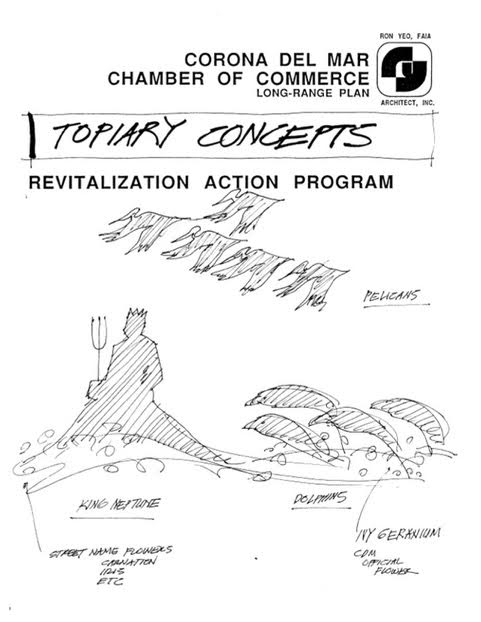
The committee’s plan for revitalization called for improving the Village image to be warm, friendly, inviting, and creative. Some of the initial concepts that were installed included: hand-painted flower banners for each of the streets and the topiary dolphins.
Original sketches for the medians featured a King Neptune leading the dolphins.
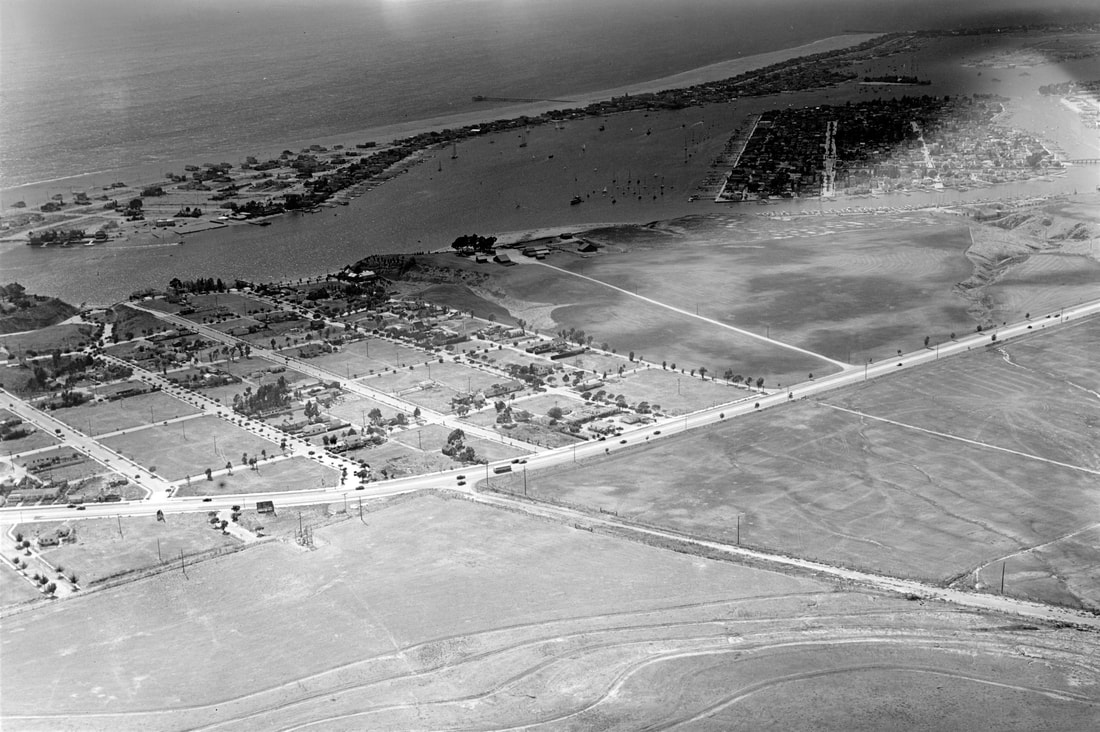
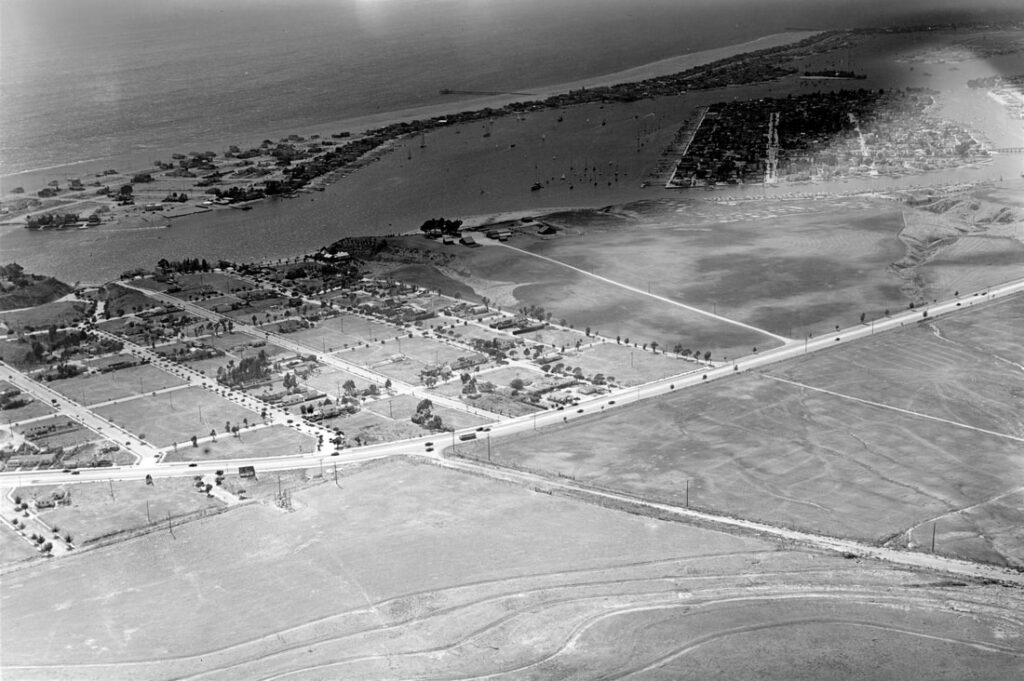
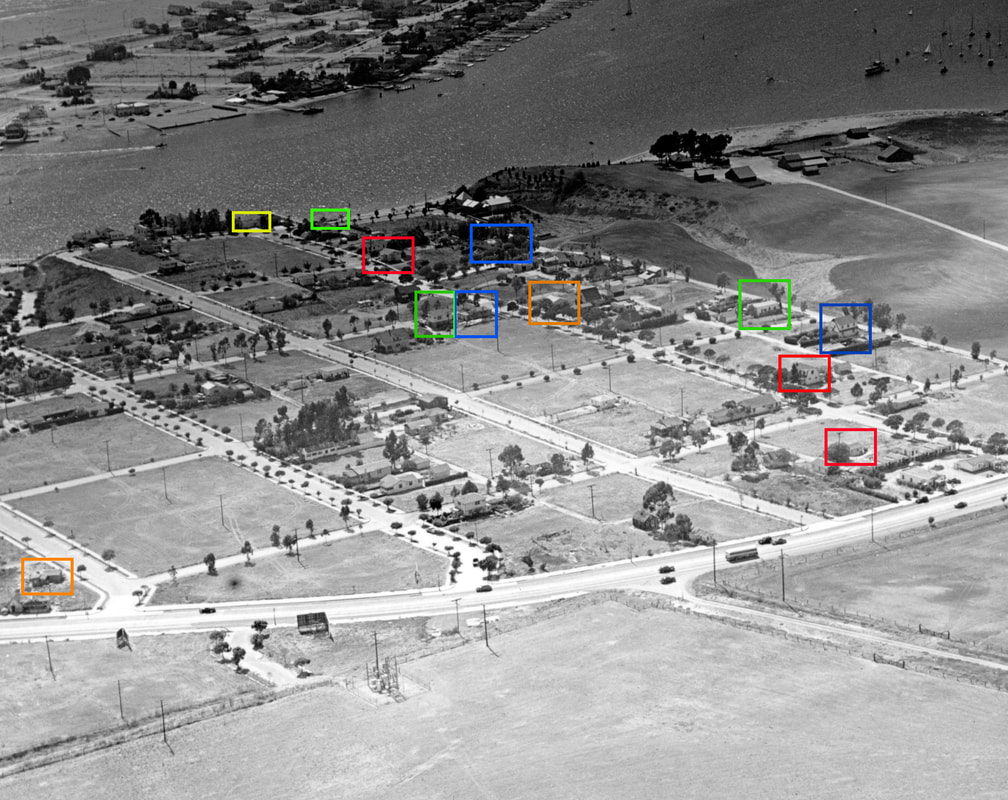
1940 Aerial View of CdM that shows Avocado, Acacia, Begonia, Carnation, and part of Dahlia Ave. With the Big Blue House now gone (can you find it in this photo?), a dozen structures from this 80 year old photo remain today.
Let’s take a look at each of the 12 remaining buildings, starting at the north end of Avocado. There are 2 surviving homes on Avocado, both built in 1931.
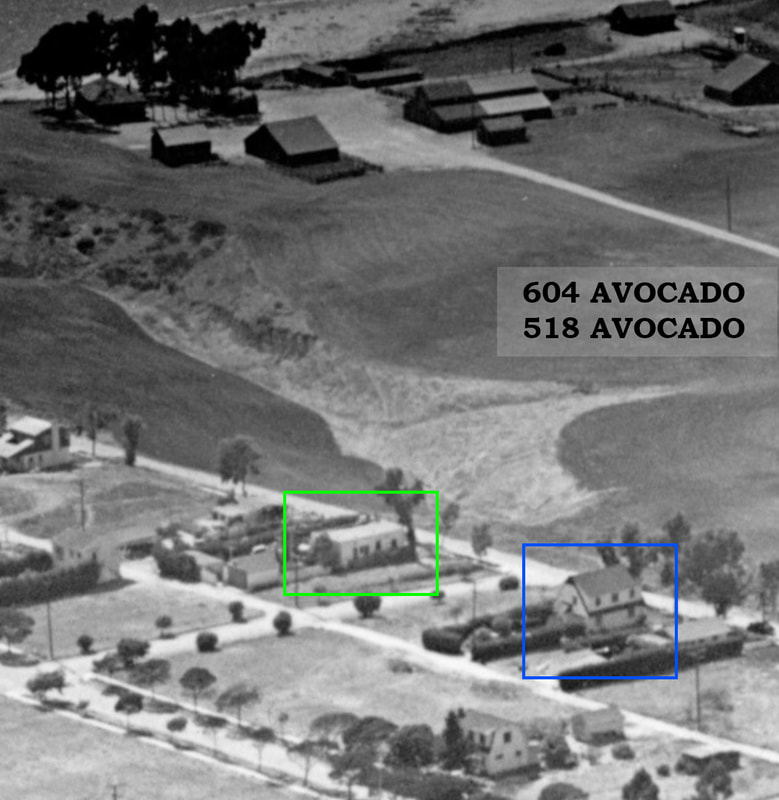
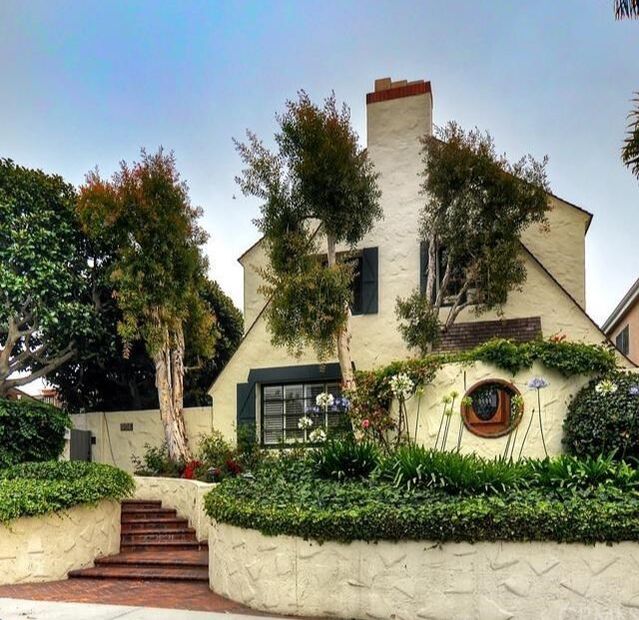
604 Avocado is a unique, storybook style 2 bed / 2 bath two story home that sold in 2015 for $1.5M. 518 Avocado has a distinctive look and is listed as a 2 bed / 1 bath, 1000 sq ft home. Here is a close-up of them from the aerial view and what they look like today:
604 Avocado, Corona del Mar, CA (2015) Photo: MLS
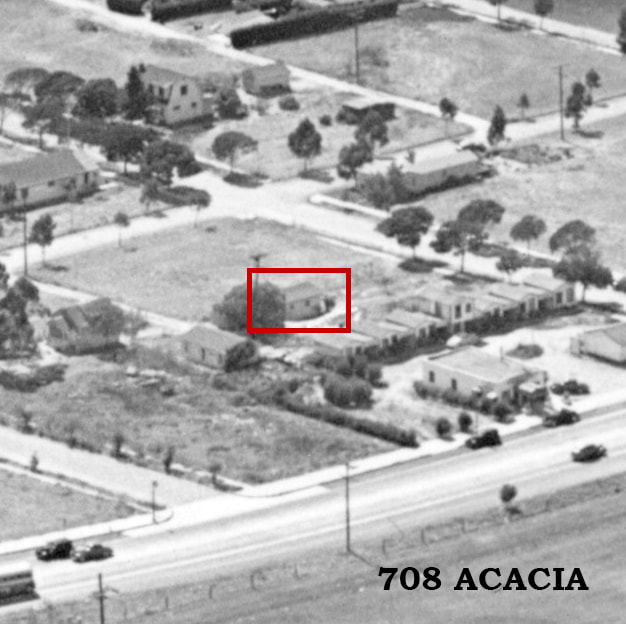
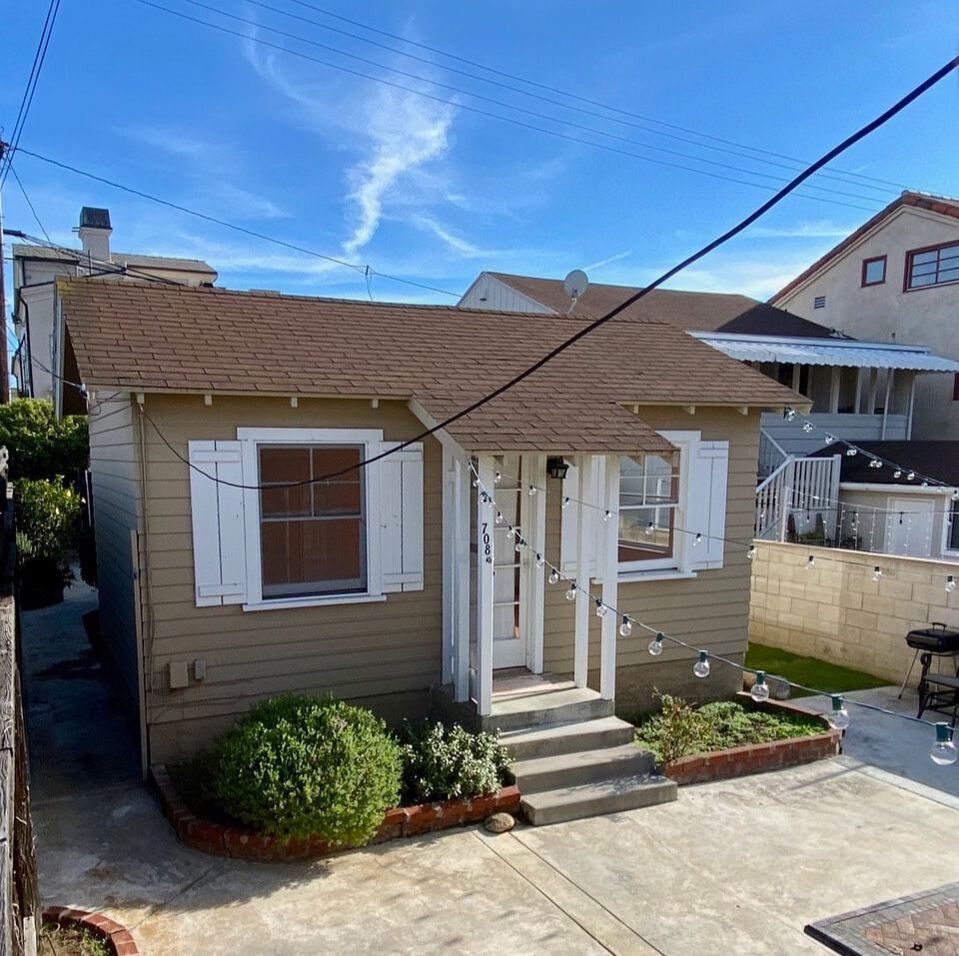
Acacia Avenue has several surviving homes. We’ll start out by PCH with 708 Acacia Ave. which is somewhat hidden as a back house today but it retains its original look from 1924 and is quietly one of the 10 oldest remaining homes in CdM.
708 Acacia Ave., Corona Del Mar, CA (2019) Photo by Ron Yeo
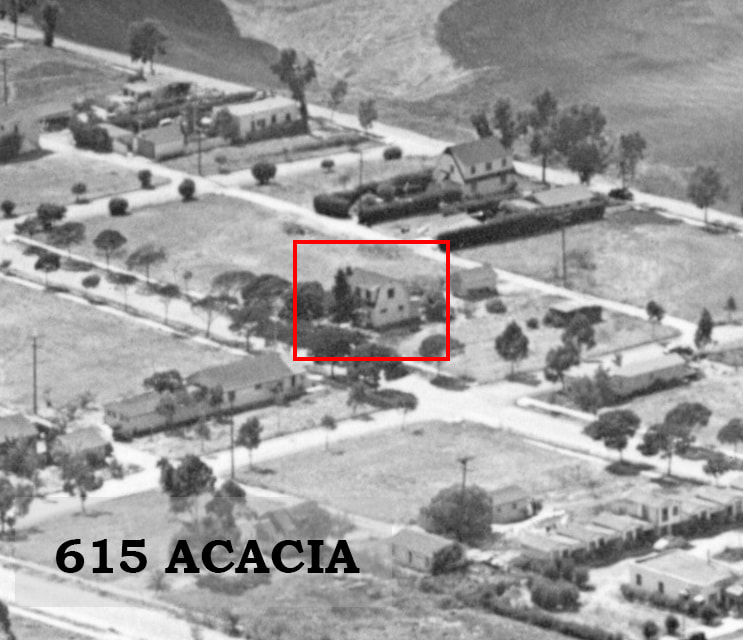
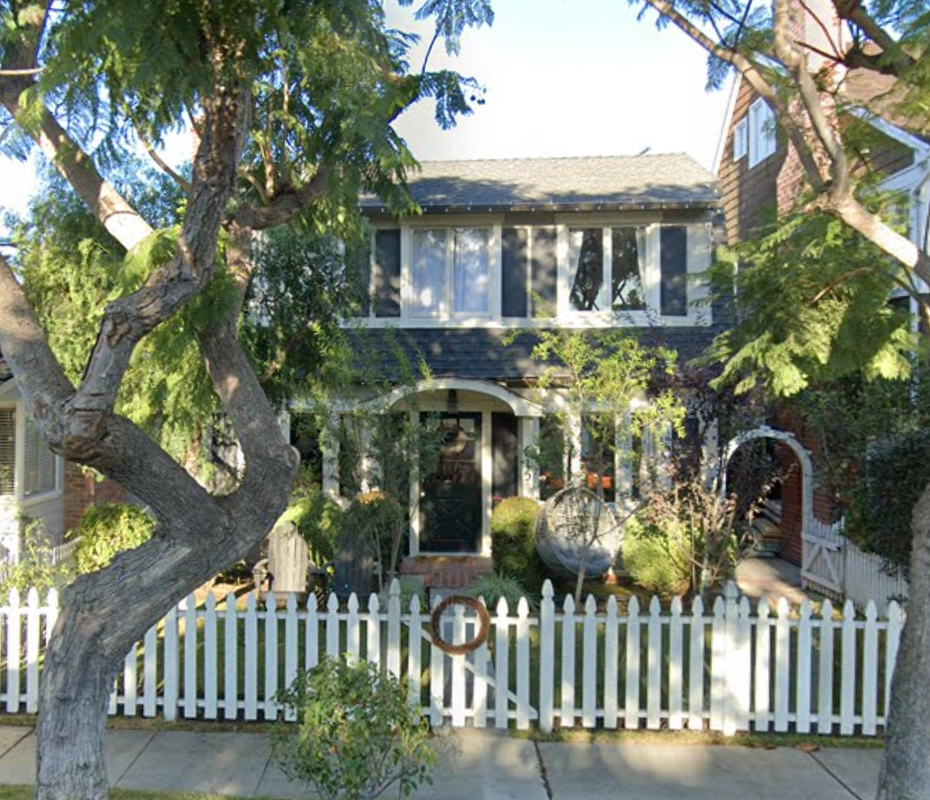
Across the street and down a block, 615 Acacia Ave. was the only house on the odd side of the 600 block of Acacia when it was built in 1940. It maintains its distinctive look today with a large 2nd story dormer and curved arch over the front door entry.
615 Acacia Ave., Corona Del Mar, CA (2018)
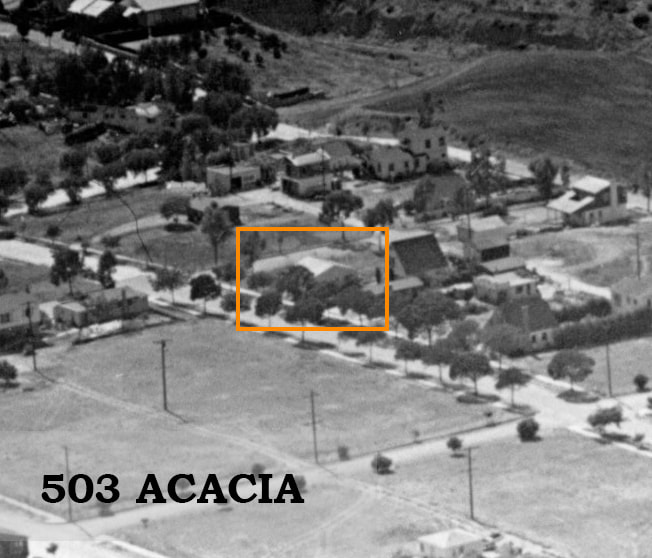
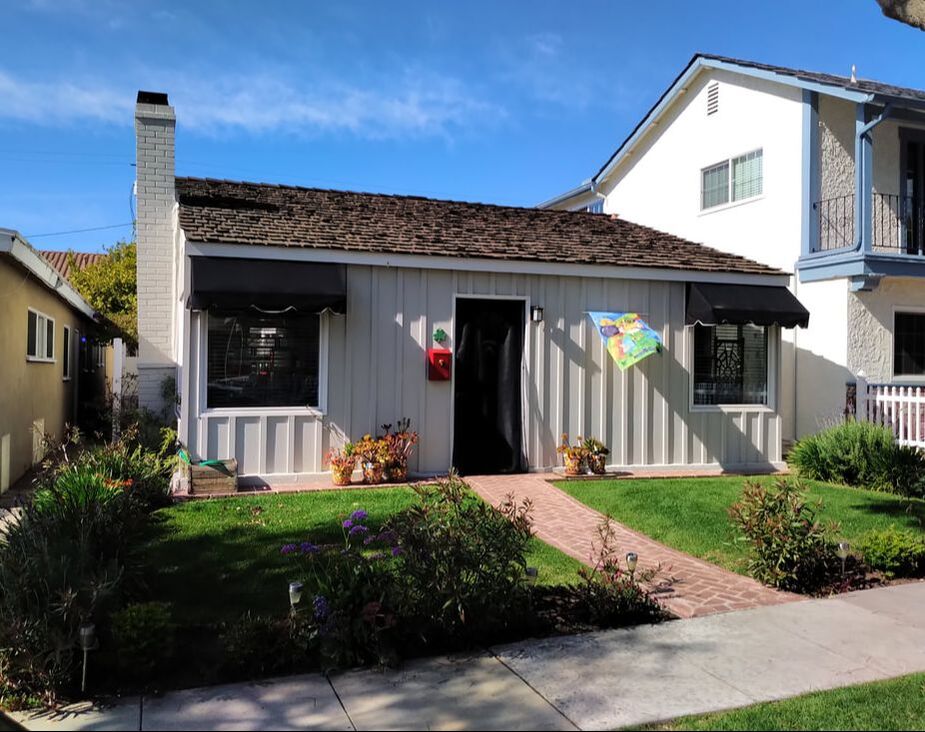
Another block down is 503 Acacia Ave. which was also built in 1940 and retains a very original look today with its cedar shake roof and board and batten siding.
503 Acacia Ave., Corona Del Mar, CA (2020) Photo by CdM Historical Society
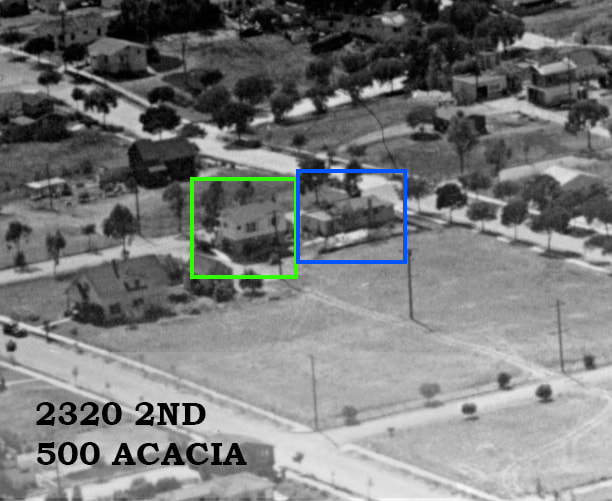
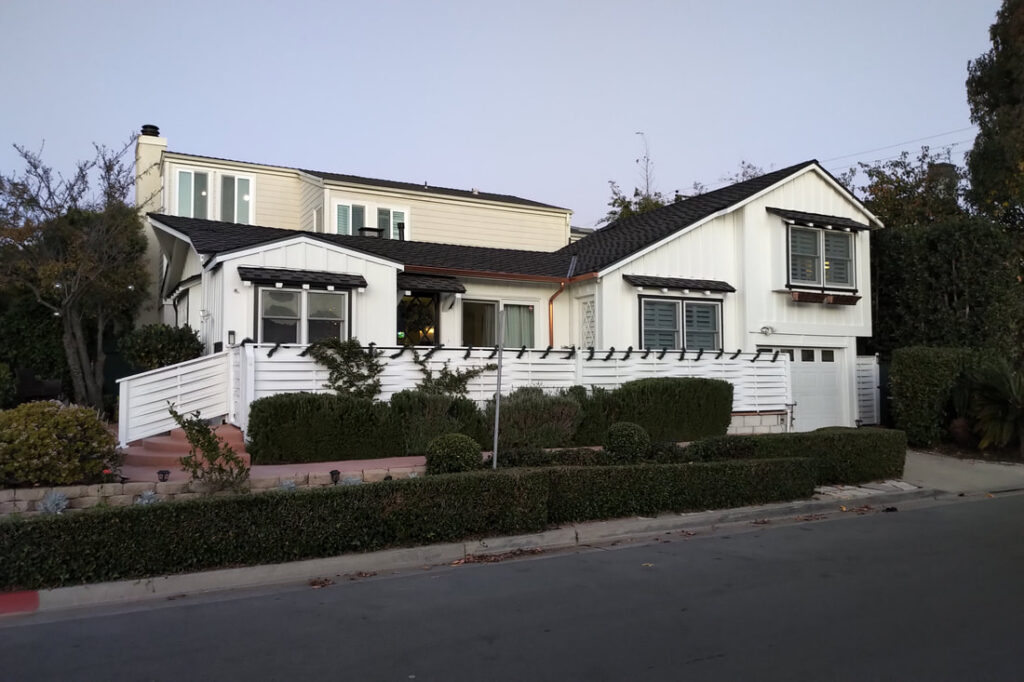
Across the street from 503 Acacia are 2 homes that were once part of the same lot –500 Acacia Ave. & 2320 2nd Ave. The original owner of the land, the Hayward family who lived in Pasadena, bought that lot and also the lot for 502 Acacia in 1925. In 1934, they built a house at 500 Acacia and then carved up the 2 lots so that their friends in Pasadena, the Clarks, could build a house next door at 2320 2nd in 1936. The lot for the house at 2320 also encompasses a good portion of what would have been the back of the lot at 502 Acacia.
2320 2nd Ave., Corona Del Mar, CA (2020) Photo by CdM Historical Society
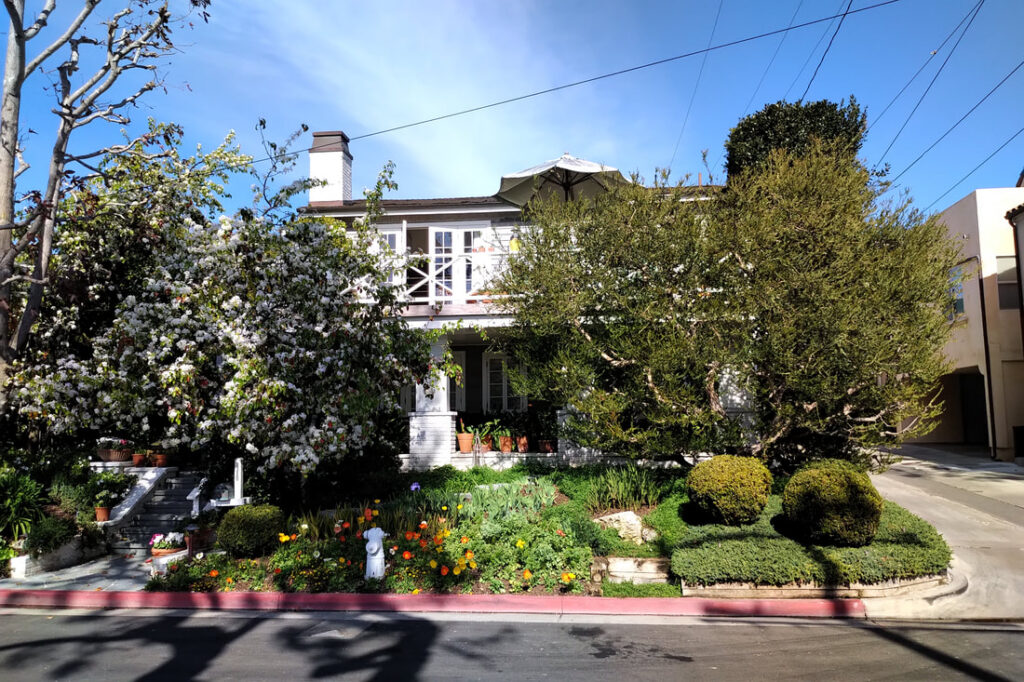
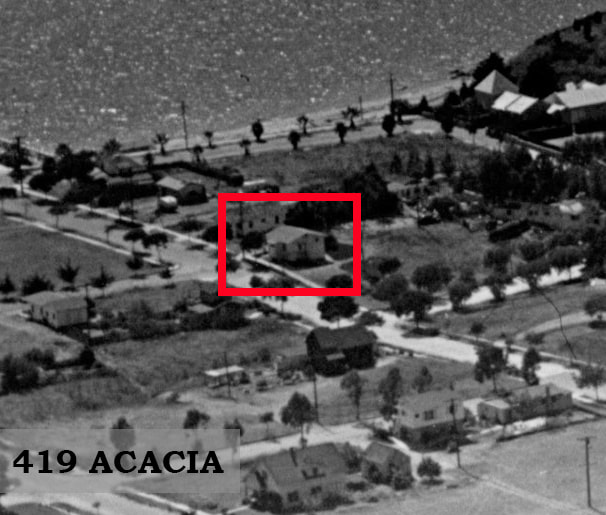
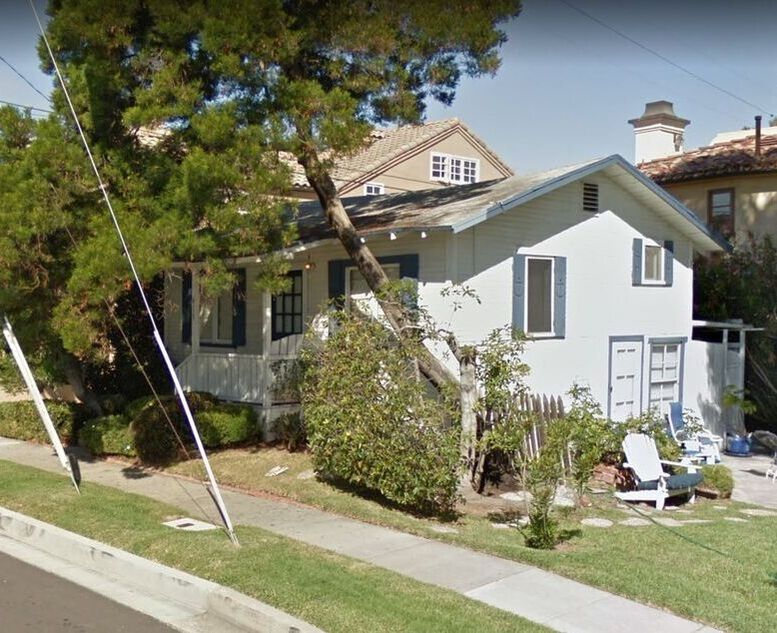
Joining 708 Acacia on the list of the 10 oldest surviving homes in Corona Del Mar is 419 Acacia Ave. Also built in 1924, it has had very few owners in its 96 years. The Johnson & Harmer families from San Dimas shared ownership of the house from 1927 to 1960 after buying it from Clara Middleton. They sold it to Andrew Campbell, a lifelong resident of San Marino and it remains in the Campbell Family today.
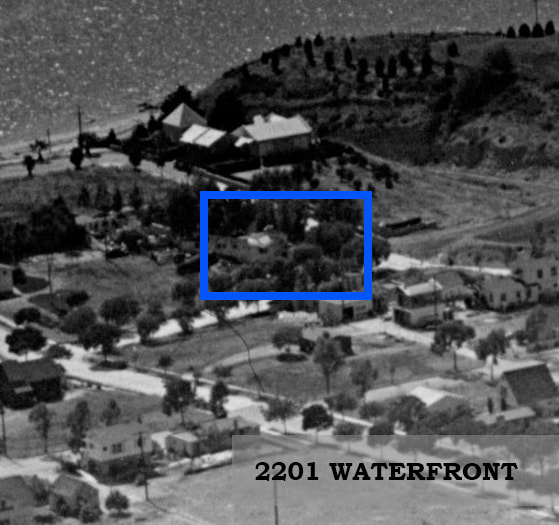
A few lots down from 419 Acacia (the lot extends down the hill to Waterfront), 2201 Waterfront Drive was one of many CdM lots that Newport Beach took possession of for unpaid taxes during the 1930s. Harry Welsh, a drafting engineer for an oil company bought the lot from the city in 1938 and the house was built the following year. The Welshes would live there for over 30 years.
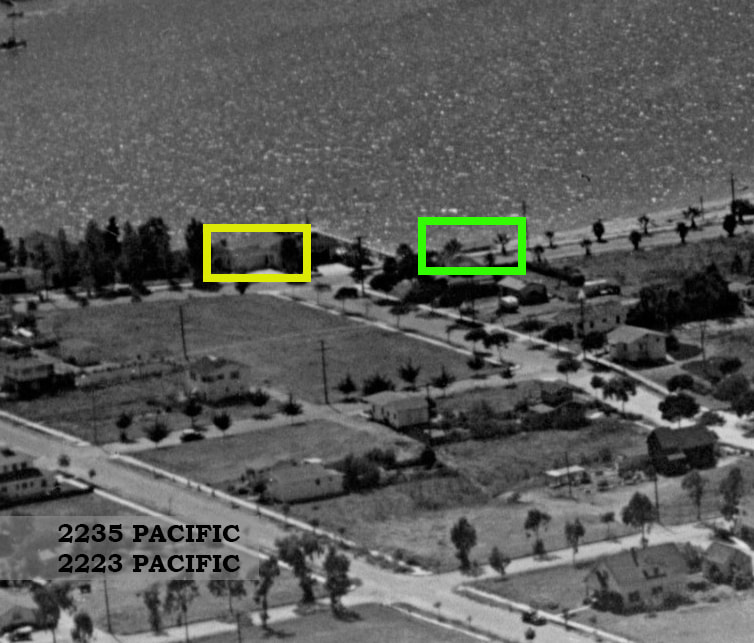
There are two more pre-1940 survivors on beautiful Pacific Drive which offers some of the best views in Corona Del Mar.
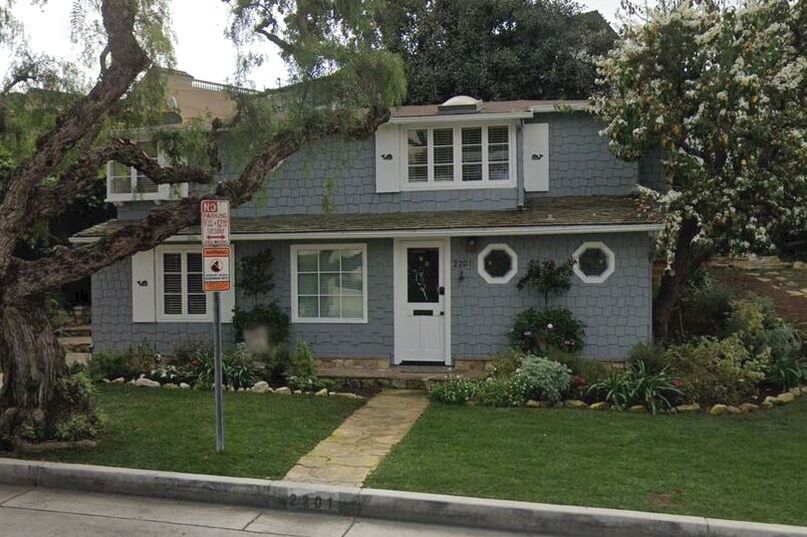
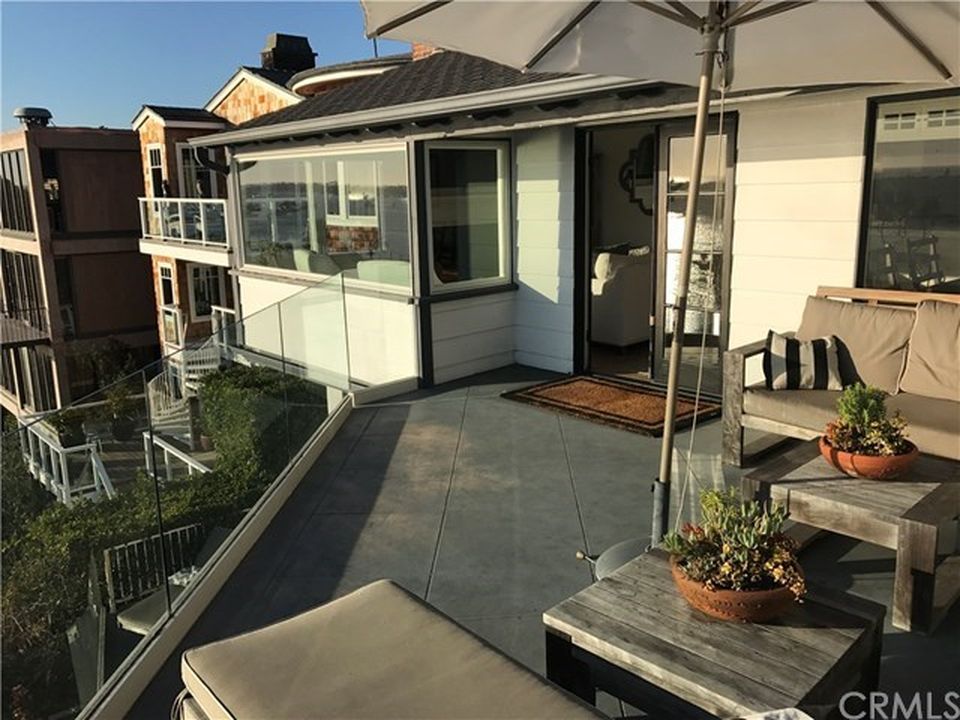
2235 Pacific Drive was built in 1936 and maintains a spectacular view from its position overlooking the bay. The back of the house seems to have a more original look but there appear to be original details and exposed beam ceilings throughout. The 3 BR / 3 BA / 1600 sq ft home sold for $2.45M in 2003 and has been listed as a rental for $15K/mo in the past few years.
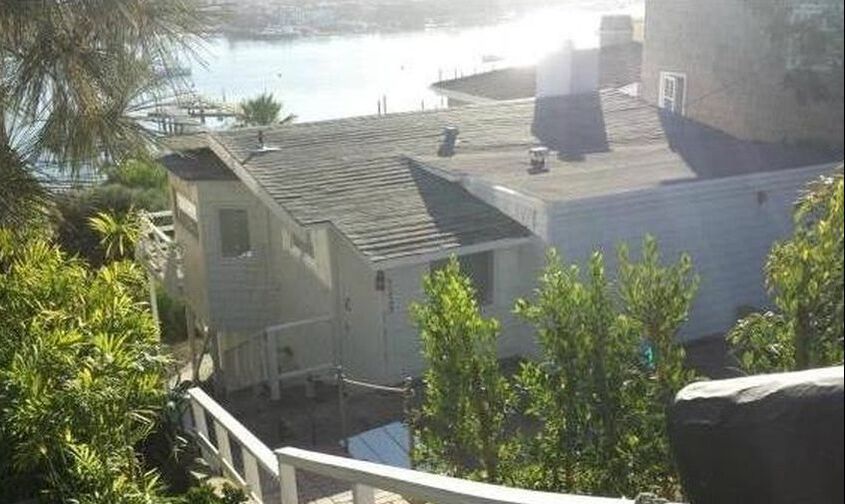
2223 Pacific Drive is tucked away below street level on Pacific but still has a very big view for such a small cottage (1 BR / 1 BA / 650sq ft). Built in 1922, it is one of the 5 oldest surviving homes in CDM and maintains an original look today.
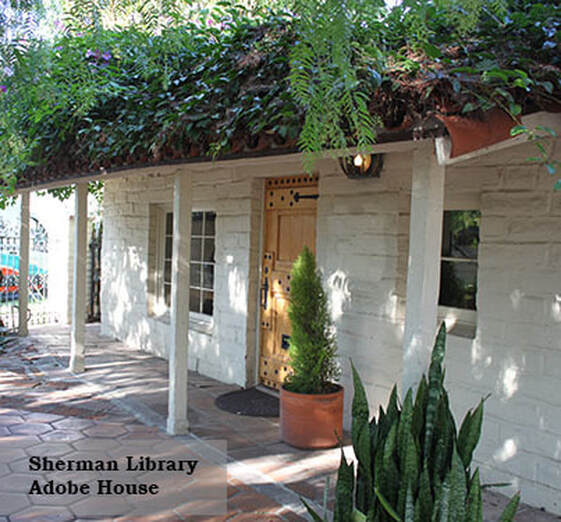
The final surviving structure that we have identified from this 1940 aerial photo is the Sherman Library Adobe House. It was designed and built by Lawrence and Pauline Lushbaugh in 1940. The small, fired-adobe house is now an exhibit room used to highlight some of the Sherman Library’s special collections. To learn more, please visit their website at thesherman.org.
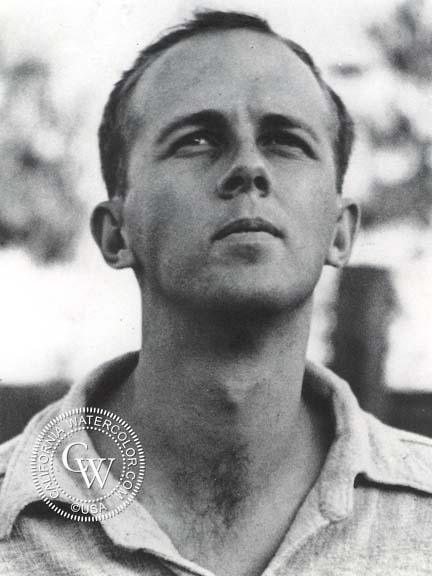
Photo of Rex Brandt (credit:californiawatercolor.com)
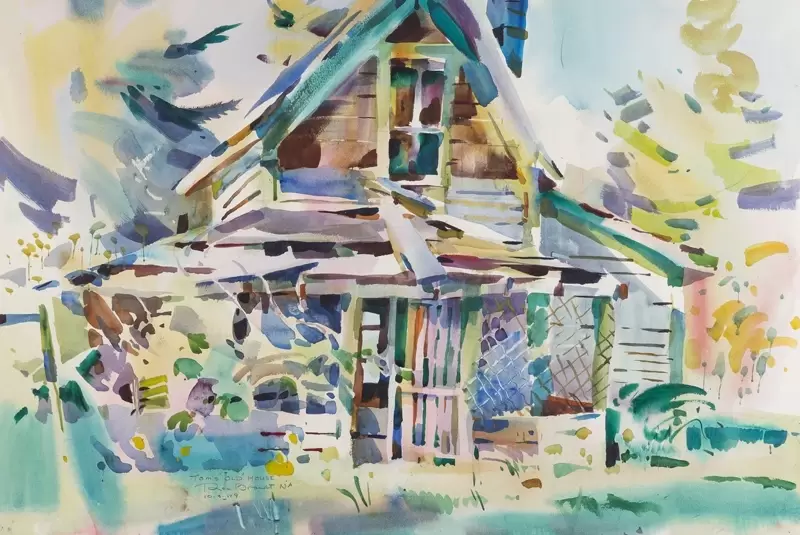
Artist Rex Brandt, who lived and worked in Corona del Mar for most of his life, is considered one of the most important and influential California watercolorists.
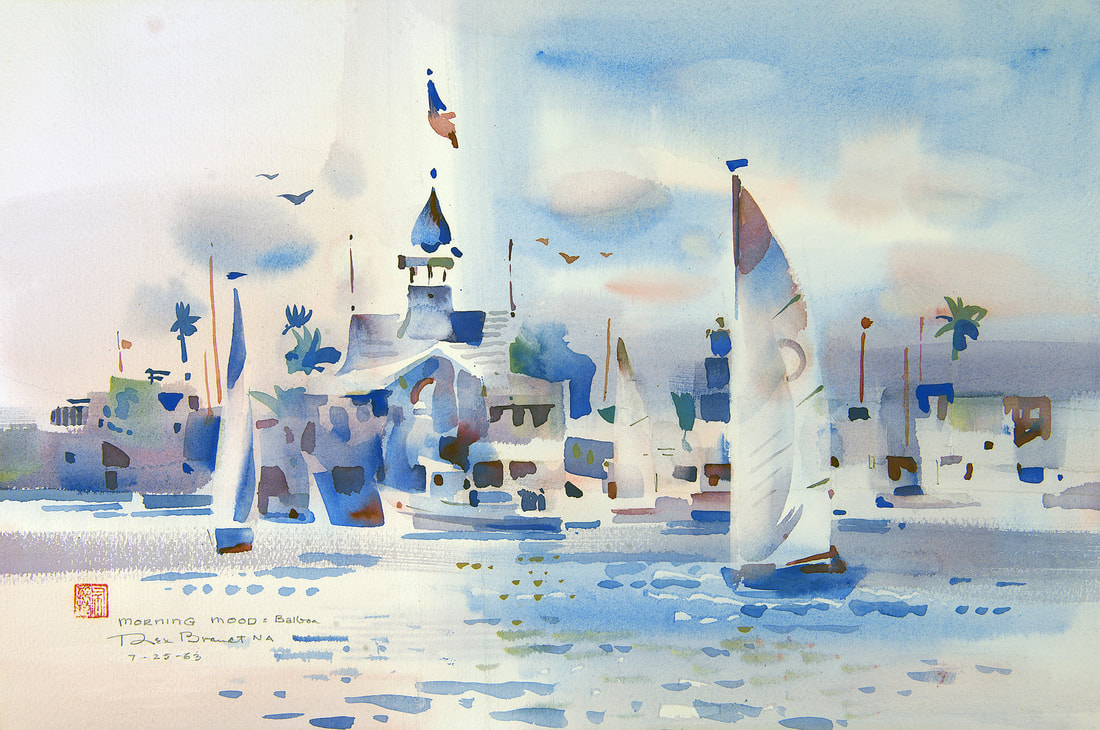
‘Morning Mood at Balboa’
From ‘Blue Sky’, his home and studio located on Goldenrod next to the Footbridge, he created hundreds of paintings of coastal scenes and one of the most important watercolor schools. Through the school and eleven books on watercolor painting, Brandt taught and inspired many professional artists.
Photo of Rex with his wife Joan Irving Brandt at home at ‘Blue Sky’ (credit: coronadelmartoday.com)
There is a plaque today that recognizes where ‘Blue Sky’ used to be located. The 1941 home was designed by Brandt and was formerly located at 405 Goldenrod.
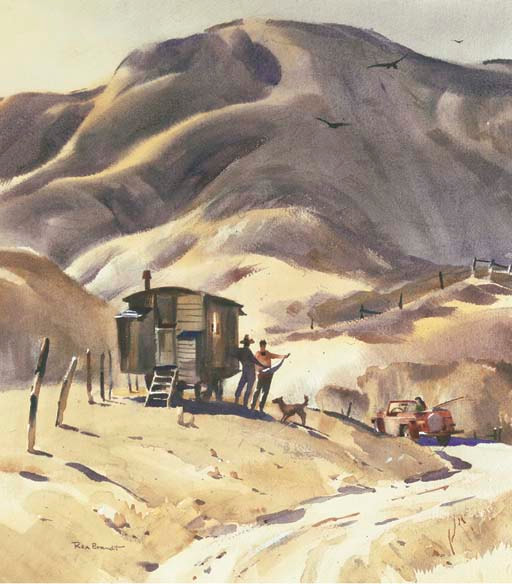
‘Consulting the Map’ is a watercolor of the Irvine Ranch, 6 miles inland from Rex’s home. It was featured on the cover of ‘Westways’ magazine in November 1954.
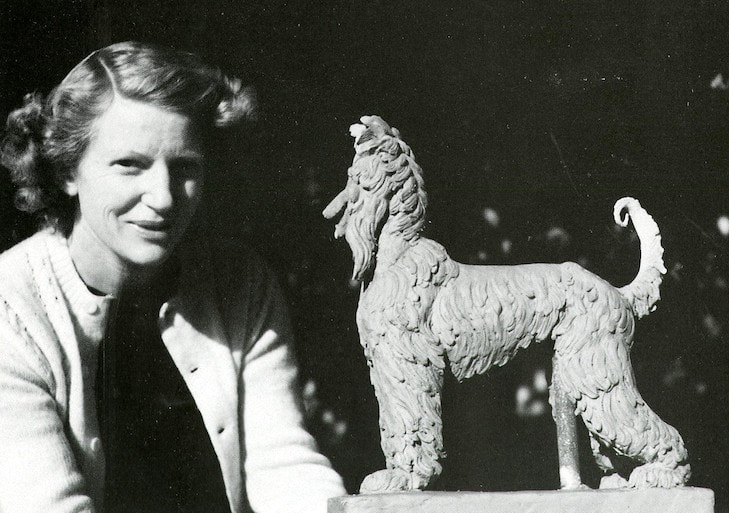
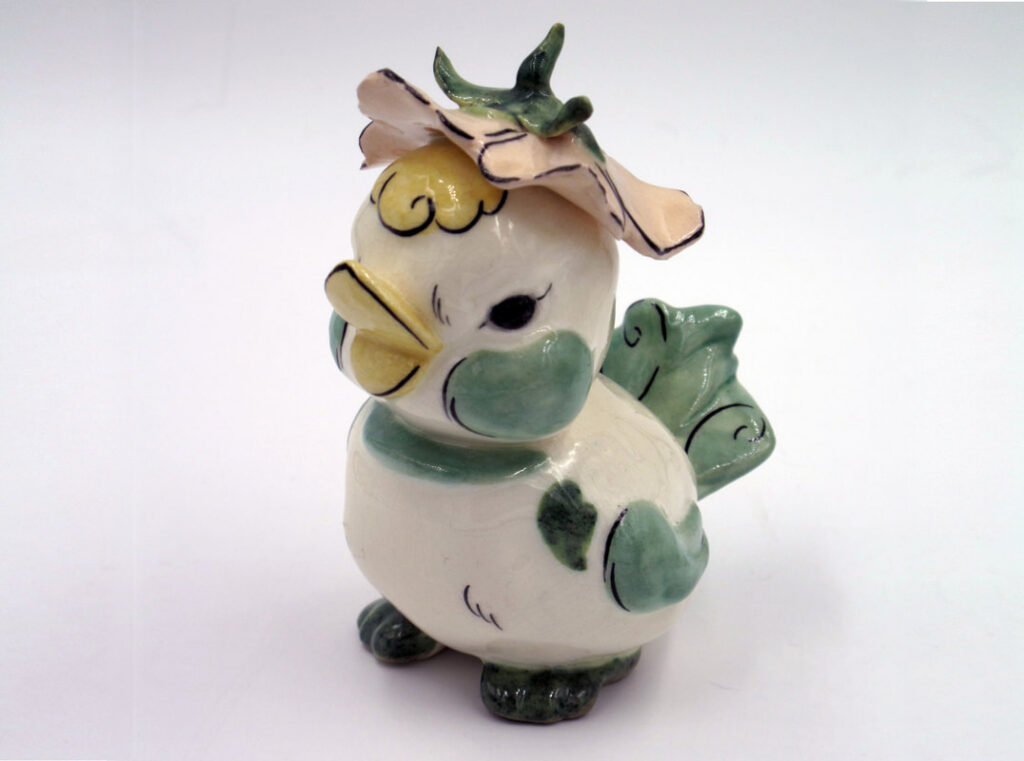
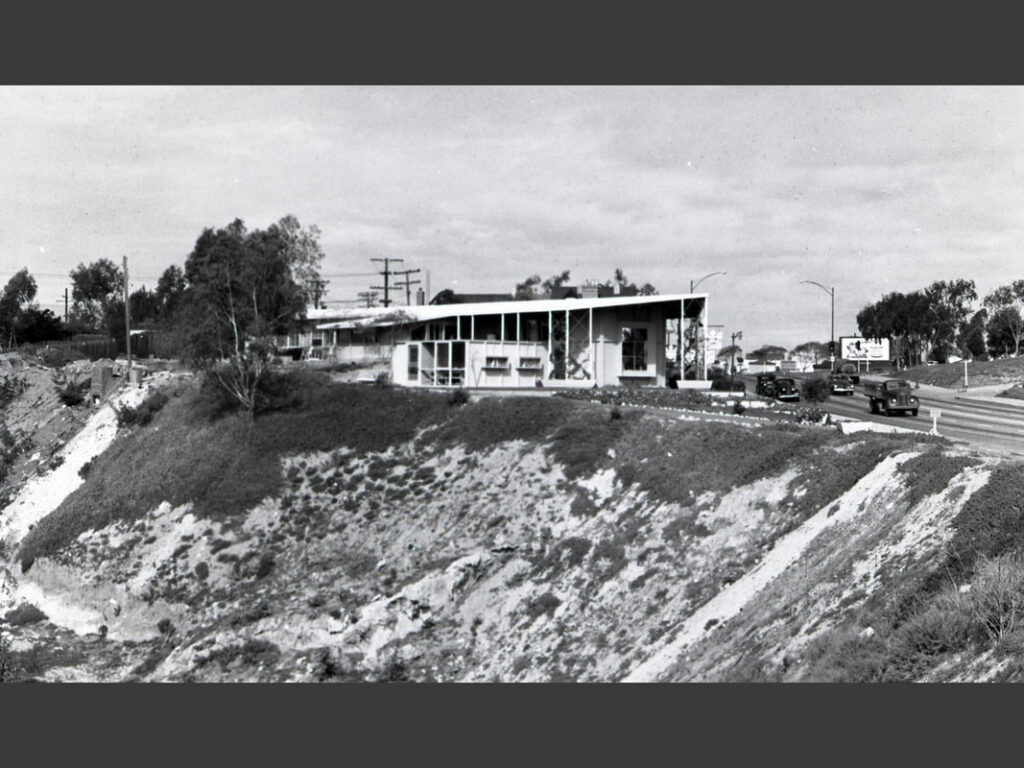
Continuing on the artist theme, ceramic artist Kay Finch (1903-1993) built her studio and showroom next to Five Crowns where Crown Cove Assisted Living is now located. It was later Sam’s Seafood and Don the Beachcomber.
Finch attended the Memphis Academy of Fine Arts in the 1920s and would move with her husband to California in 1929. She did some freelance work and teaching before opening a small studio in a former milking shed. As demand for her work grew, she and her husband, Braden Finch, bought a two lot parcel of land on PCH and had her studio next to her home. Demand for her work shot up during WW2 when imports were stopped and she expanded her studio and showroom. By the late 1940s, she employed as many as 65 employees, all the pieces were made by hand, with each designed by Finch. Her designs were known for their color and distinctive whimsical design. You can find many of her pieces on eBay today, generally from $30-$300.
A delightful cottage that is rather unique in that it features elements of streamline moderne architectural style with its rounded edges.
The 1948 cottage has 600 sq ft and 2 bedrooms and 1 bath. It was last sold in 1984 for $215,000 and looks like it has been rented out the past few years.